Guest blog by Jamie Cockle, Paediatric Clinical Educator, Medifab
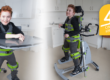
Jenx standing frames have been at the forefront of my therapy toolkit ever since I started as a fresh faced, newly graduated Physiotherapist at Noah’s Ark Children’s Hospital in Cardiff, Wales. Since then, my career has taken me to the other side of the world, continuing to support the paediatric population and service my passion for working with children and their support networks as a clinical educator for Medifab, the distributor of Jenx in Australia and New Zealand.
The important of standing and weight bearing for children with neuro-disability is something I have been aware of from an early point in my career, thanks to the support and training I received. As I look back on my time as a junior therapist, I recognise how lucky I was to have clinical mentors who guided and educated me, sharing their knowledge and providing me a solid clinical foundation for a career in paediatrics. This led me to reflect on the fact that, as allied health professionals, we are required to be lifelong learners, continuing to commit to CPD to advance skills and knowledge in a way that improves our practice. I consider it an honour to now be in a position where I’m facilitating that professional development daily as part of my role.
 Whilst I spend a lot of time educating in the traditional “classroom” or lecture environment, I also search for opportunities to educate outside of this traditional modality. Finding alternative ways of providing education around assistive technology is crucial for a country such as Australia, with its large geographical area, multiple states and territories and natural fluctuation in service provision and standard practice all playing a part in making the landscape here unique. The allied healthcare world is rapidly changing in Australia, with many challenges to overcome and changing perceptions of traditional roles and responsibilities between Occupational Therapist (OT) and Physiotherapist (PT) colleagues. Currently, one area that’s particularly challenging is the provision of standing supports for children, impacted by therapist experience and confidence, level of Physiotherapy service provision and inability to access funding for supports. More and more OTs that I meet and work with are engaging in standing supports in order to facilitate 24-hour postural care for their clients, however a large proportion self-report low confidence in this area. I truly believe that the best placed therapist for prescribing such supports is often the individual that knows the child the best, understanding their presentation, history, challenges and needs, and I have particularly supported the push for more OTs to consider provision of standing supports as a part of their standard practice, avoiding it being considered an area exclusive to Physiotherapists.
Assessment processes and tools can provide a systematic blueprint for gathering information about our clients, allowing us to build a picture of their abilities, limitations, needs and goals. As a junior therapist, I utilised assessment tools and forms as a way of building confidence in the assessment I was performing, ensuring I had covered all necessary areas that would allow effective diagnosis and treatment.
At Medifab, assessment and prescription of AT for seating and lying has been facilitated for a number of years by our own assessment forms, providing therapists with support to achieve great outcomes for their clients. When I joined Medifab in 2021, I noticed there was a gap in our resources that provide the same support for the assessment and prescription of standing aids, and we set about to create Medifab’s first standing frame assessment tool. This was developed alongside a resource guide, providing supplementary information designed to give insight as to why a certain question within the assessment was necessary and what the answers to that question could inform. We are proud to now see this tool is now being used across Australia, within every state and territory, supporting OTs and PTs alike with their assessments and ultimately improving outcomes for their clients (the most important bit of course!). It’s our hope that this tool will continue to provide support to therapists who are wanting to promote standing and weight-bearing with their clients, ultimately accessing the unique benefits which make it an integral part of 24-hour postural care.
For more information about our range of Jenx standing frames, click here!
This blog is part of our 40 stories for 40 years’ series, celebrating our partnerships over the years. Click here to read more blogs in this series.
About the Author:
Jamie Cockle is a Paediatric Clinical Educator for Medifab based in Sydney, Australia. A trained PT, he has built on his years of clinical experience to provide clinicians, families and product specialists with education and support in the use of paediatric equipment across Australia and New Zealand. He is passionate about Paediatrics and ensuring that all children, no matter their ability, have opportunities to be well supported as they grow and develop.