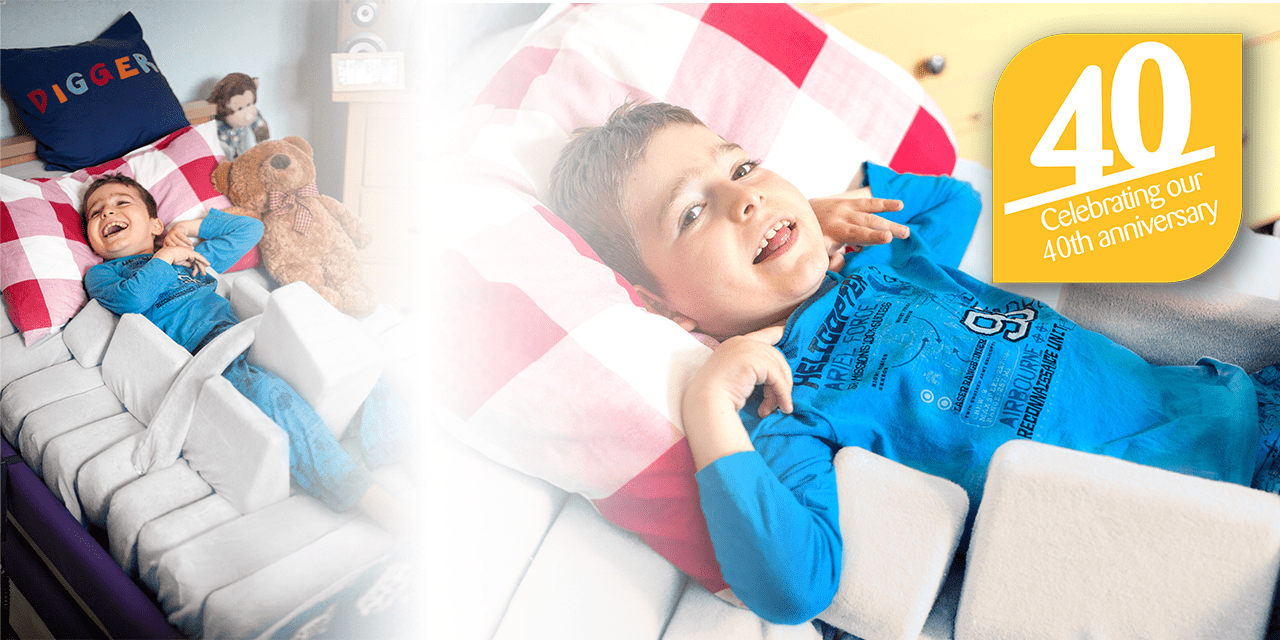
This guest blog as part of our 40 stories series is from a research team at Sussex Community NHS Foundation Trust and Brighton and Sussex University Hospitals Trust. They’ve been investigating a novel lying position for children and young people with neuro-disabilities, called the Breathe-Easy position, and have conducted a study assessing the feasibility and acceptability of this intervention. Read on to learn about more about the potential of the Breathe-Easy position!
Why do we need to consider respiratory health when prescribing night-time positioning equipment? Children and young people with complex neuro-disability are at increased risk of respiratory illness. It is the leading cause of death for children and young people with more severe cerebral palsy. They are susceptible to chest infections, requiring medical treatment in the community or in hospital, which impacts on their health, quality of life and well-being.
Children with severe movement limitations and swallowing difficulties are most at risk. Poor postural control or spinal deformity may affect the function and capacity of the lungs. Children may have a weak cough reflex making secretions harder to clear or have increased secretions leading to moist airways and pooling of secretions in the mouth and throat. They often have gastrointestinal reflux with stomach contents coming up into the throat and mouth. Difficulties with swallowing can lead to aspiration, where food, fluid, saliva or stomach contents enter the lungs. This can cause chest infections.
Common night-time positioning recommendations
Clinicians often assess and prescribe night-time positioning equipment with a prime focus on postural management, with comfort and sleep as important outcomes. Postural alignment and symmetry may be considered, as well as where the child is load bearing to minimise pressure area risk. Night-time positioning equipment is often set up for the child to use in a supine (on their back) or side-lying position. When children have respiratory issues or gastrointestinal reflux, parents and carers are often advised by health care professionals to lie the child with the head end of the bed raised.
Trial of a different night-time position for children and young people at risk of respiratory illness
At Vancouver Hospital in Canada, a novel lying position has been used to aid earlier discharge of children with neuro-disability with recurrent or persistent respiratory infections. We wanted to trial this position as a preventative intervention with the children we see in the community, who have significant movement and swallowing difficulties, and consequently experience repeated chest infections and difficulties with excessive saliva in their upper airways. We wanted to consider a different approach to night-time positioning for this group of children.
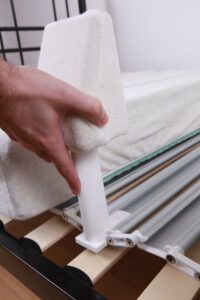
The Dreama utilises supports to achieve a range of night time positions, which can include the Breathe-Easy position.
The Breathe-Easy study was developed to explore whether this novel lying position could be used by parents and carers at home to prevent chest infections and improve respiratory health in children with complex neuro-disability. The position involves children lying in a supported, side-lying to three-quarters prone (on their front) position to sleep overnight, with the bed flat rather than the head-end raised. This position facilitates secretions to come out of the mouth rather than remain in the back of the throat or pass into the lungs. We used the child’s existing sleep system if they had one, or pillows to support the body, to achieve a safe and comfortable position. A Dreama sleep system was loaned to support the study, which enabled a few of the children who required a greater degree of postural support to achieve this position. The aim of the positioning was to drain upper airway secretions overnight, but it was equally important that the child was comfortable, able to sleep and that their postural needs were considered.
We have now conducted a small pilot study to see if this intervention can be done in a community setting by parents and carers. We wanted to know what problems might be faced if this was done at home and not in a hospital. Each child needed to be individually assessed to ensure that they were able to be comfortably positioned in the Breathe-Easy position and upper airway drainage was achieved. We needed to ensure that we considered the risk of reflux by using a bile bag to drain the stomach contents overnight.
We found that with a gradual introduction of the positioning and an adaptive approach, parents and carers were confident to try this intervention with the child overnight. Often the child’s position was changed during the night, but others remained in one position for the whole night. Parents and carers were mostly positive about the intervention and reported improvements in the child’s respiratory health, secretion management and quality of their sleep.
However, we learnt that this night-time position is not suitable for all children with complex neuro-disability. Careful assessment is required, and the child’s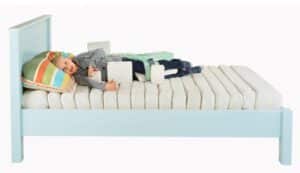 suitability may change due to many other factors including their medical, orthopaedic, health or feeding regimes. We only studied this intervention with a small group of children and so now need to trial it with more children and in other areas of the country. It is important that clinicians consider breathing, swallowing and respiratory issues when prescribing night-time positioning for children and young people with complex neuro-disability, as well as postural management and sleep. We hope that the next Breathe-Easy study will support an evidence based intervention in night-time positioning for this group of children.
This study was conducted in Sussex Community NHS Foundation Trust. For more information on the study please contact sarah.crombie@nhs.net.
This blog is part of our 40 stories for 40 years’ series, celebrating our partnerships over the years. Click here to read more blogs in this series.