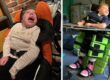
Emma is a 7 year old who lives in Utah with her mum Jaclyn, dad Brandon and big sister Ava. Emma was born with a rare disorder called Lissencephaly, whereby whole or parts of the brain appear smooth and do not have the ‘grooves’ or ‘folds’ of a typically developing brain – https://rarediseases.org/rare-diseases/lissencephaly/
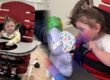
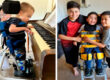
Emma also has a diagnosis of Epilepsy and Cerebral Palsy, and is affected by seizures, spasticity and weakness throughout her body. Emma depends on 24-hour care from her loving family, but with their support she can participate in many of her favourite activities. Emma loves attending school daily and seeing her friends, or splashing in the water with her family during swimming therapy, or dancing and listening to music with Ava whilst using her standing frame.
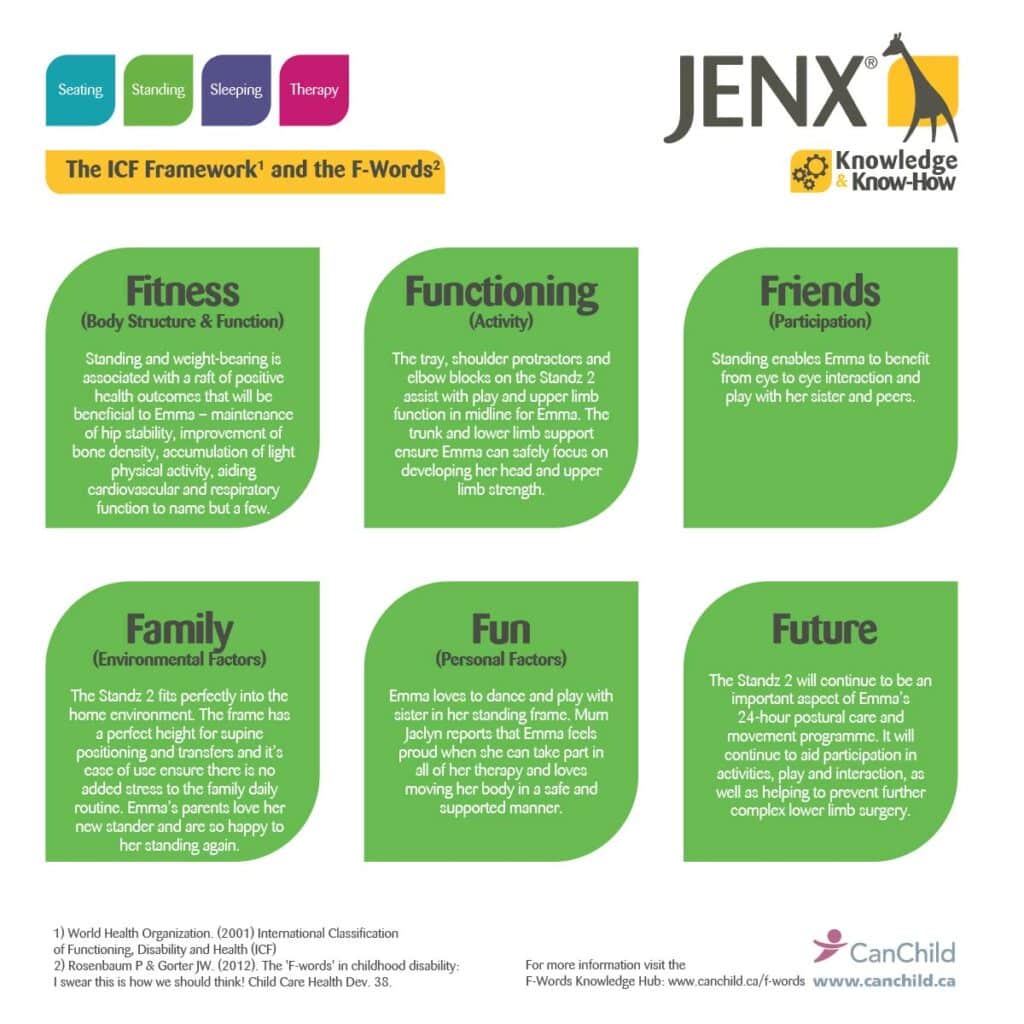
Standing has been a difficult task for Emma in recent years due to her lower limb contractures and then complex double hip surgery in July 2021. Post-surgery, Emma required a standing frame that could accommodate the length discrepancy in her shorter left lower limb and provide gentle and supportive hip abduction positioning, whilst still appropriately support her head and trunk and accommodate any contractures still present in her lower limbs. After trialling other standing equipment, eventually Emma, her family and her therapist found one that met her needs perfectly – the Standz 2 by Jenx!
With the Standz 2, Emma can now view her environment from a different perspective and play eye to eye with her sister. It enables an important change of posture and a break from prolonged periods of sitting. Some studies have suggested that transitioning from a seated position to standing with supportive equipment may amount to the accumulation of light physical activity in children with similar functional levels to Emma [1], so the Standz 2 can offer that opportunity to interrupt sedentary behaviour that we know is associated with poorer health [2].
The tray, shoulder protractors and elbow blocks on the Standz 2 help keep Emma’s upper limbs towards midline which can be important for play and interaction. The individual leg posts with individually adjustable knee supports and foot plates allow for comfortable and accurate support of Emma’s leg length discrepancy. The innovative hip abduction feature ensures appropriate positioning that may be beneficial for maintaining hip stability and range of motion in the developing hip, particularly after surgery [3,4].
Emma’s Mum Jaclyn reports that she ‘loves’ Emma’s new stander, it is complimenting Emma’s daily routine and intense therapy she is currently receiving. She is noticing Emma gain more strength in her neck control and trunk. Jaclyn has also noticed Emma ‘seems happier with less seizure activity and more engagement’.
Thank you for sharing your incredible story and inspiring us all here at Jenx Emma!
Click here to download Emma’s Case Study
References:
- Verschuren, O. et al. Muscle activation and energy-requirements for varying postures in children and adolescents with cerebral palsy. J Pediatr. 2014; Nov; 165(5):1011-6.
- Smith, B. et al. Physical activity for general health in disabled children and disabled young people: summary of a rapid evidence review for the UK Chief Medical Officers’ update of the physical activity guidelines. Department of Health and Social Care: London, UK. 2022. Available at https://www.gov.uk/government/publications/physical-activity-in-disabled-children-and-disabled-young-people-evidence-review/physical-activity-for-general-health-benefits-in-disabled-children-and-disabled-young-people-rapid-evidence-review. [accessed on 05.09.2022].
- Martinsson, C., & Himmelmann, K. Effect of weight-bearing in abduction and extension on hip stability in children with cerebral palsy. Pediatric Journal of Physical Therapy. 2011; 23 (2), 150-157.
- Martinsson, C. & Himmelmann, K. Abducted Standing in Children With Cerebral Palsy: Effects on Hip Development After 7 Years. Pediatr Phys Ther. 2021; 33(2), 101-107.
- Rosenbaum, P. & Gorter J. The ‘F-words’ in childhood disability: I swear this is how we should think! Child: care, health and development. 2011; 38(4): 457–463.